
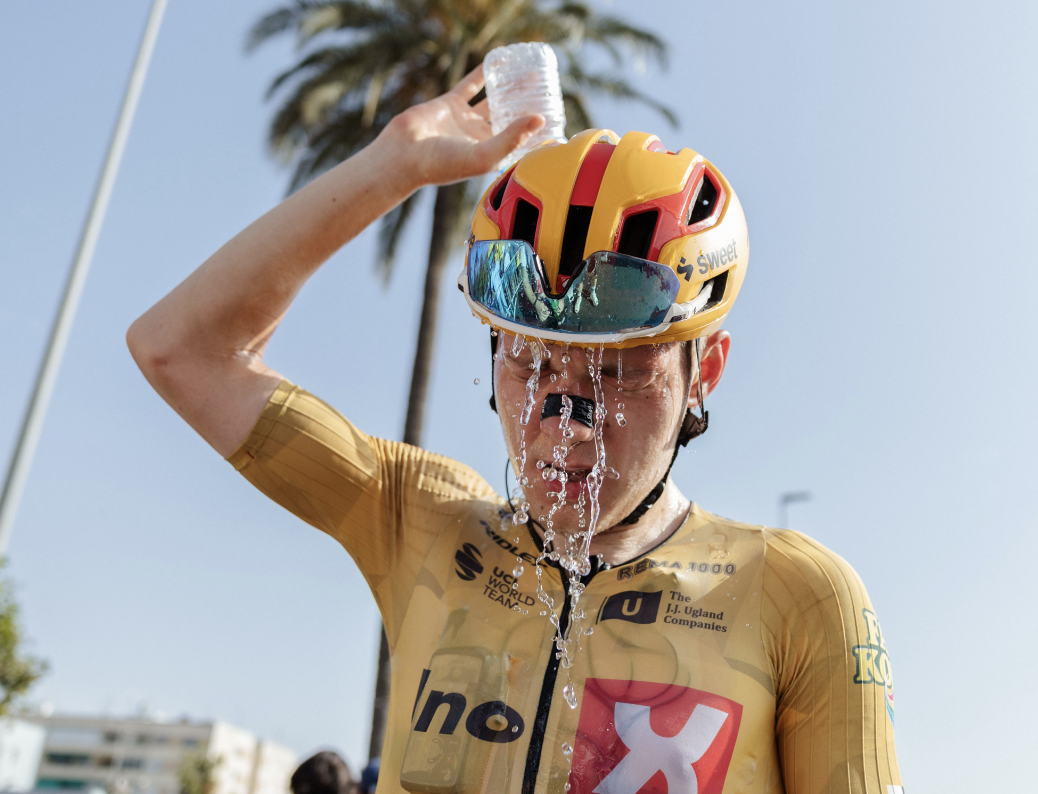
Simon Dalby coping with extreme heat at La Vuelta
A summer of heatwaves made temperature a fixed part of our race preparation. With CORE, we have learned to get our riders ready for the hottest days.
Olav Aleksander Bu, Head of Performance at Uno-X Mobility Cycling, has seen the conversations ahead of our races change.
"Before, a lot of the talk ahead of a race was about the course profile, who was on the start line and what the tactics should be. Now the weather is a fixed topic in those same conversations. If we expect big changes in temperature, it affects both how we plan training in the weeks before the race and what the riders wear to handle the heat or the cold during it," says Bu.
This season gave the topic plenty of weight. Already in January, the Tour Down Under stage to Willunga reached 37.7°C. At the Tour de France, three stages went above 36°C, the time trial to Dijon at the Tour de France Femmes reached 34.2°C, and the Vuelta stage to Córdoba hit 37.4°C. Meanwhile, several of our riders were preparing at home in Western Norway, where the summer was cool and wet.
"I can hardly remember such big differences between the weather at home and what was waiting for us at races," Bu says.
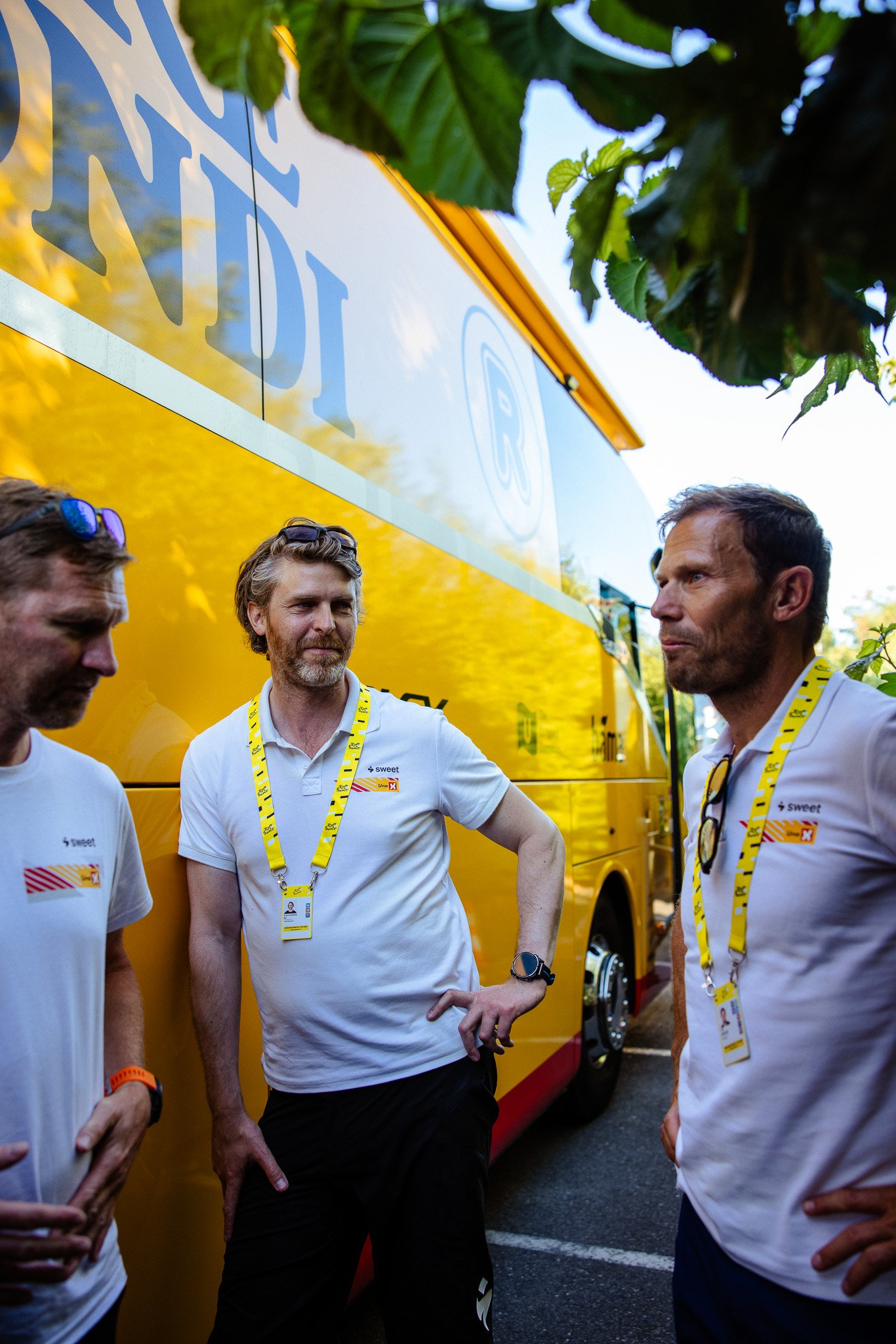
Olav Alexander Bu in the shades during a wam Tour de France
Making the hours count
Heat is one piece of a bigger picture. Both our men's and women's teams have only recently stepped up to the WorldTour, and we work hard to make good use of the resources we have.
"Looking at the men's and women's teams together, we have had a clearly better season than we had set as our goal for 2026. We work closely together to see the whole picture and prioritise what matters most for performance," says Bu.
For Bu, time is the real limit. On the way from amateur to world class, there tends to be more of everything: more training, more technology and more people around the rider.
"You still only have 24 hours in a day. To go from world class to world champion, what you choose to spend those hours on becomes decisive," he says.
That is why the plan is built around each rider. Before every new training block, and when we plan each training week, the rider, the coach, the sports director and the relevant specialists decide together where the hours should go.
"I think a lot of our progress comes from us getting better as a team at deciding what gets priority."
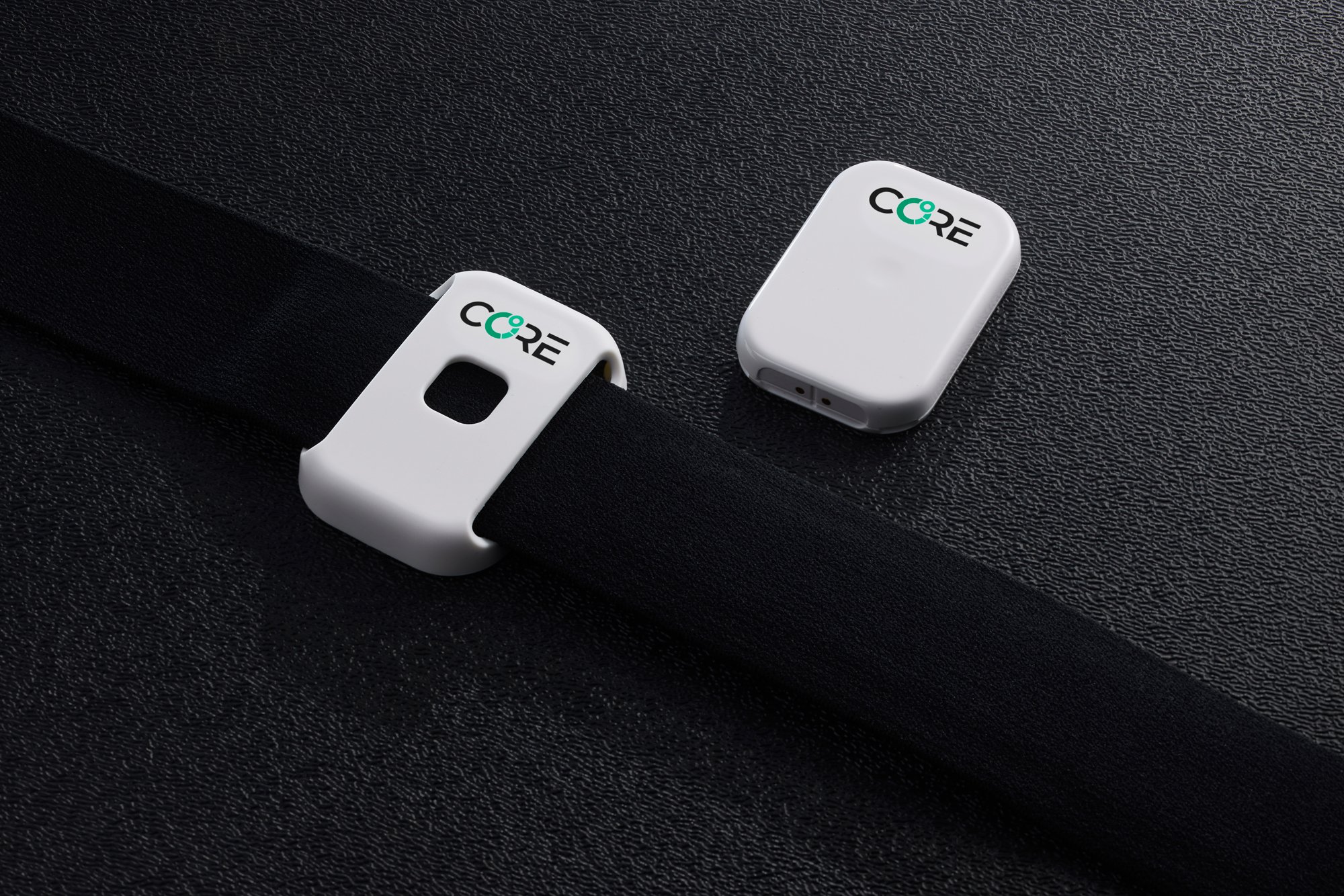
The device from CORE
Steering heat like watts
The heat shows why those choices matter. In the most extreme cases, we have seen performance drop by 30 to 40 percent compared with what the same rider manages in more normal temperatures, although the size of the effect depends on which conditions you compare.
Heart rate, watts, lactate and temperature help us understand what each rider is good at and what limits them. If a rider loses a lot of efficiency in the heat, or trains in a colder climate before travelling to hot races, there is good reason to prioritise heat training. For another rider, the same hours may be better spent on something else.
"Heat training now has a fixed place in our coaches' toolbox, alongside periodization, altitude training, workout models to tactics and technique," says Bu.
CORE is the sensor we use to follow how each rider responds to the heat, and Bu draws a direct line to the tools coaches already know well.
"When we prepare a rider for a hot race, we use CORE to guide the heat load much in the same way a coach uses heart rate and watts to guide an interval session."
Through the whole session, CORE tracks skin temperature. If it takes 40 minutes for a rider to reach the planned heat zone in a one-hour session, only 20 minutes are left in the zone. If the target was 30 minutes, the rider is 10 minutes short. In the next session, we can then reduce the cooling so the rider reaches the zone sooner, or make the session longer.
Ahead of hot races, we have built in targeted heat blocks and gradually increased the time each rider spends in the zones we want, using the room temperature, the fan or an open window to hit the planned load. The goal is for the rider to hold the watts the race demands for longer in the heat.
Heat also has a use in the final build-up to a race, or when a rider is coming back from injury. Added to the less race-specific sessions, it lets the rider push fewer watts while keeping for example heart rate and ventilation up, which spares the legs.
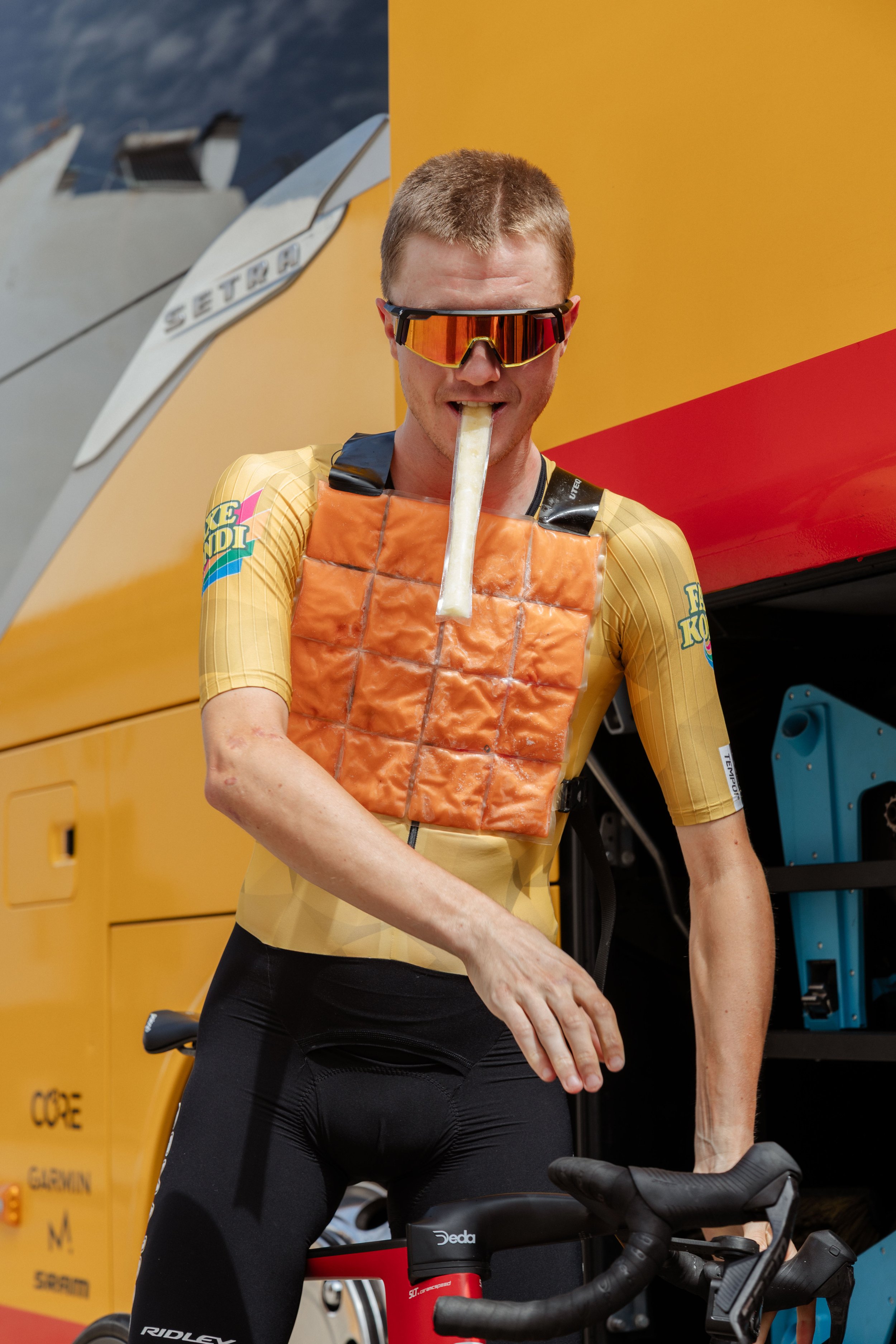
Martin Tjøtta using ice cream and ice vest to cool down before start
Learning block by block
The biggest return from CORE this season has come in the blocks where we developed and tested the heat protocol itself, adjusting one session at a time based on what we saw in the previous block. Closer to an important race, the work is mostly about repeating what we know works, with CORE confirming that the response is as expected.
"We actually never want surprises. What I care about is understanding better why a rider reacts the way he or she does," says Bu.
The same sensor helps with clothing. It is almost impossible to feel whether core temperature rises by 0.02 or 0.04 degrees per minute, but over half an hour that is the difference between 0.6 and 1.2 degrees. With CORE between the skin and the jersey, we can compare garments at the same watts and in similar weather.
Bu himself started using CORE sensors as early as 2019, to test and develop race clothing for the heat expected at the Olympics in Tokyo. "We keep moving more of that testing from the lab out in the field, and there we depend on technology partners like CORE to measure how the clothing affects performance," he says.
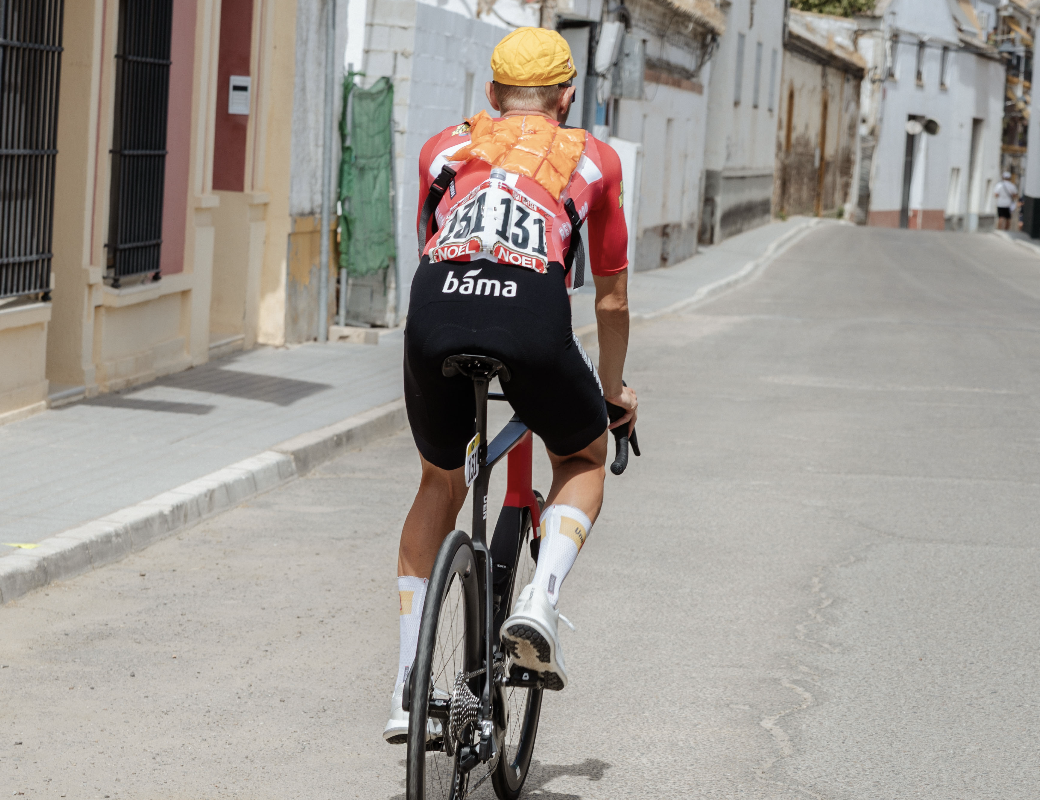
During this years La Vuelta, one of the stages were shortened due to heat
For those wondering what actually happens in the heat
A rider pushing 300 watts produces around 1,200 watts of heat at the same time. Bu simplifies this with an analogy of a 1,200-watt heater in a container holding 75 litres of water, about the weight of a 75-kilo rider. Heating the water from 37 to 39 degrees takes:
9 minutes and 46 seconds in a room at 25°C
8 minutes and 47 seconds at 37°C, about 10 percent faster
8 minutes and 34 seconds at 40°C, about 12 percent faster
The heater is the same every time. At 25 degrees the room draws heat away, while at 40 degrees it adds heat as well.
On the bike, it works the same way. Air at 25 degrees helps cool the skin, while air at 37 or 40 degrees adds heat. Then the body depends on sweat, because sweat only takes heat with it when it dries off the skin.
Heat training helps the body cope. One of the early adaptations is more plasma in the blood, which makes it easier for the heart to keep blood flowing both to the working legs and out to the skin, the body's radiator.
For the rider, the question is how long they can hold the watts needed to stay with the group. "On a decisive climb, it can be the difference between staying with them over the top and fighting for the win, or getting dropped halfway up," says Bu.
For more information, contact:
Henning Askjer Lefsaker, Head of Communications.